Parisite

Expert Guiding in France for Groups and Independent Travellers

Flag of France

Home

Search & Find

Expert Guiding in France for Groups and Independent Travellers

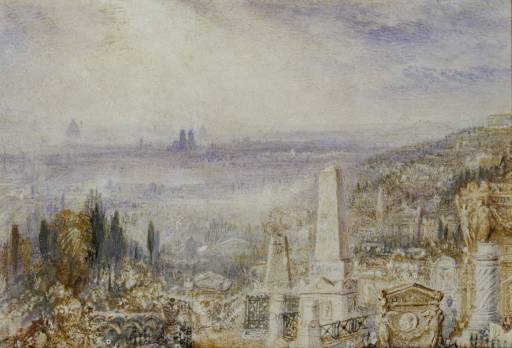
Paris - From Pere La Chaise. Massena`s Monument.

Cultural and Historic Tours for individuals and small select parties conducted by expert guide lecturer. As an Official Guide Lecturer I am authorized to make visits to principal Paris Museums and Collections.

James writes:

“When I came to Paris over 20 years ago it was to study Art History at the Sorbonne. I'd been taught French at school, boring, full of utterly useless and out of date phrases like where to park your coach and horses! I got lodgings in a small pension de famille in Montmartre; that's where I learned everyday French...and slang!”

“At the Sorbonne I got interested in the Middle Ages, when France built all her great Gothic cathedrals. My Master’s dissertation was on one of the chronicles of the Kings of France written by a monk from Paris in 1260. “

“Next I wrote an audio guide to Paris so that visitors could wander around on their own and discover Paris. In 2004 my Audio CD on the 1944 D Day Landings in Normandy was issued for the 60th Anniversary. I am now writing my Doctoral Thesis on 'The Golden Age of Illustrated Travel Books 1820-1850'.”


A few years ago I discovered a Diary by my great-great-grandfather, George Hay Edwards II  who lived a very long and fulfilling life (1815-1912) –  and was successively a barrister , civil engineer and a good watercolour painter who had worked with his uncle  the architect Thomas Allom (1804-72). Some of his paintings are in the Victoria and Albert Museum in London.

To my considerable  surprise the extracts I read were about Paris in the 1850s. Up until then I thought I was the only member of my family to have lived in Paris. And here was George Hay Edwards living with his family in Paris during the early years of the Second Empire of Napoleon III , in the Batignolles,   which is now part of the 17th arrondissement. George Hay Edwards  was a civil  engineer  working on the Paris to Caen,  and subsequently  to Cherbourg,  Railway line. His diary describes how he walked the line, traced the track,  designed bridges and viaducts for the English consortium of Thomas Brassey  (known as the railway king and also as a ‘European Power’) , the engineers Joseph and  his nephewWilliam  Locke and the locomotive designer Buddicom, who had won the contract to build the Railway for the French.


He also talks about Paris, seeing the sights, visiting the Museums  and  his reaction to  the paintings of Ingres at the 1855 Exhibition, he remarks  that some of the American pictures were very good, as well as  Winterhalter’s portrait of the Empress Eugenie and her Ladies-in-waiting. He frequently  goes to the Theatre and the Opera  - he lists Mayerbeer’s ‘The Huguenots’, ‘The Conquest of Africa’, ‘Le Muletier de Toledo’ at the Lyrique, ‘Les Mousquetaires de la Reine’ at the Opera Comique, ‘Puritani’ by Bellini at the Italian opera. He  goes to the Theatre des Varietés, the Gymnase  to see  Signora Nena and  the  Spanish Dancers,  to the Odeon  to see ‘The Vicar of Wakefield’, the Hippodrome to see  the ‘Siege of Silistria’, he has a box for six at the Italian Opera to see the Barber of Seville, as well as Meyerbeer’s ‘Etoile du Nord’. In 1855  he visits the World Exhibition  in Paris but thinks it was not as good as the one in London. The same year he saw Hamlet at the Odeon, specially put on in English for the foreign visitors.

He visits  the tombs  of the Kings and Queens of France at  the old abbey of St Denis just outside Paris, dines at the café Durant, visits the fashionable cemeteries of  Père Lachaise and Montmartre , goes to the Luxembourg Gardens and Galleries,  goes up the Arc de Triomphe, travels  out to  the west of Paris to the fashionable suburbs of St Cloud, St Germain en Laye and Versailles. He goes fishing in the Seine at Neuilly, witnesses the funeral procession of Marshal St Arnaud who died in the Crimea, visits the Louvre and Les Invalides, shops at Le Pauvre Diable, sees Queen Victoria’s visit to Paris, glimpses Napoleon III and his family from the balcony at the Tuileries,  he does the usual  English tourist things  in Paris and has coffee at the  Café de la Paix and ices at Tortoni’s.  He describes seeing the  Illuminations celebrating the  taking of Sebastopol during the Crimean War.  He  boated  on the Seine at Asnières ,  just like the Impressionists would do a generation later,  and fished at Maisons Lafitte.


Here he  is in Paris in the 1850s  ,  just before the Impressionist generation , but at a time of great interest with the beginning of the rebuilding of Paris and a certain number of very good artists working in Paris including Delacroix, Cabanel, Courbet, Thomas Couture, Paul Delaroche, the sculptor Etex, Hippolyte Flandrin, Gérome, Gleyre  (who took over Delaroche’s atelier in 1843  and where his  later pupils in 1863 included Monet, Renoir, Bazille and Sisley), Ingres, Isabey father and son, Theodore Rousseau, Alfred Stevens, Constant Troyon, Horace Vernet, Winterhalter, the architect Viollet Le Duc, the photographer Gustave Le Gray and Alexander Dumas , whose son fell in love with the Lady of the Camelias who  died in 1847 and Dumas fils wrote the novel in 1848 which inspired  Verdi to  compose his opera The Traviata in 1853. Now Dumas fils and Alphonsine Plessis are buried in Montmartre cemetery.


And today in 2008 I can retrace the steps of my great-great-grandfather and invite you to go on the walks on this site and look at  my recommendations of how to enjoy the modern city of Paris.


If you want to read/see one of my walks on paris  - go to Writing


James M’Kenzie-Hall